Water-Damaged Floor Repair · Bronx, NY

Water-Damaged Floor Repair After a Refrigerator Leak in the Bronx

A leaking refrigerator line left water sitting on a Bronx kitchen floor for days. It soaked through the vinyl planks into the parquet underneath, which rotted and grew mold. The damaged section came out, the subfloor dried, plywood went in at the original height, and a new vinyl plank floor went down on top.

water damaged floor repairsubfloor repairmold under vinyl flooringrefrigerator leakvinyl plank floor repairparquet subfloor replacement
View More Projects
Water-Damaged Floor Repair After a Refrigerator Leak in the Bronx
Kingsbridge, The Bronx, NY
ClientResidential client
LocationKingsbridge, Bronx
Property typeResidential home
CompletedAugust 2026
Starting condition

A leak nobody saw, and a floor rotting from underneath

A refrigerator water line let go while the apartment was empty, and the water stood on the kitchen floor for days. It spread into the living room. The vinyl planks on top looked mostly fine — but the smell said otherwise.

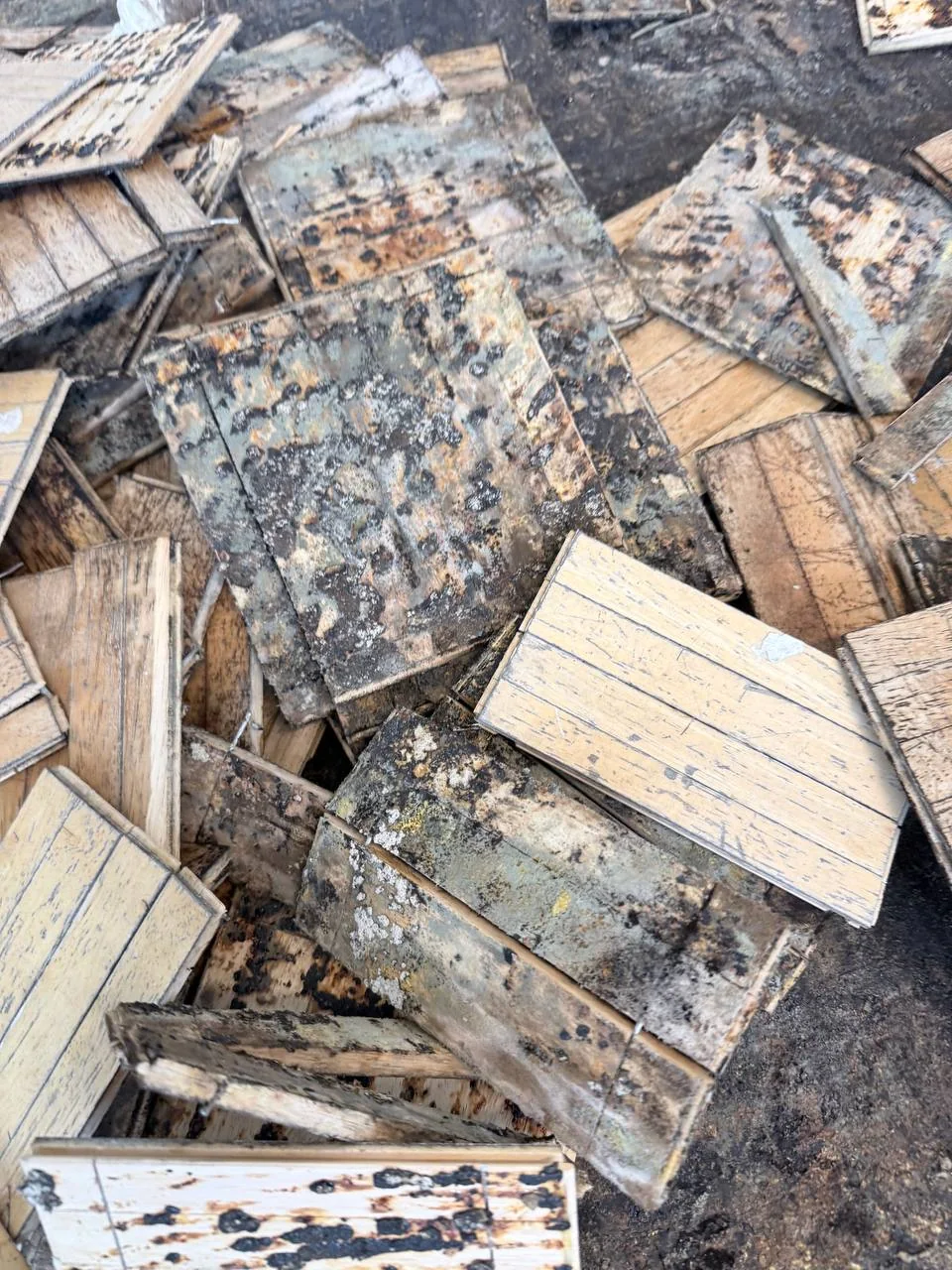
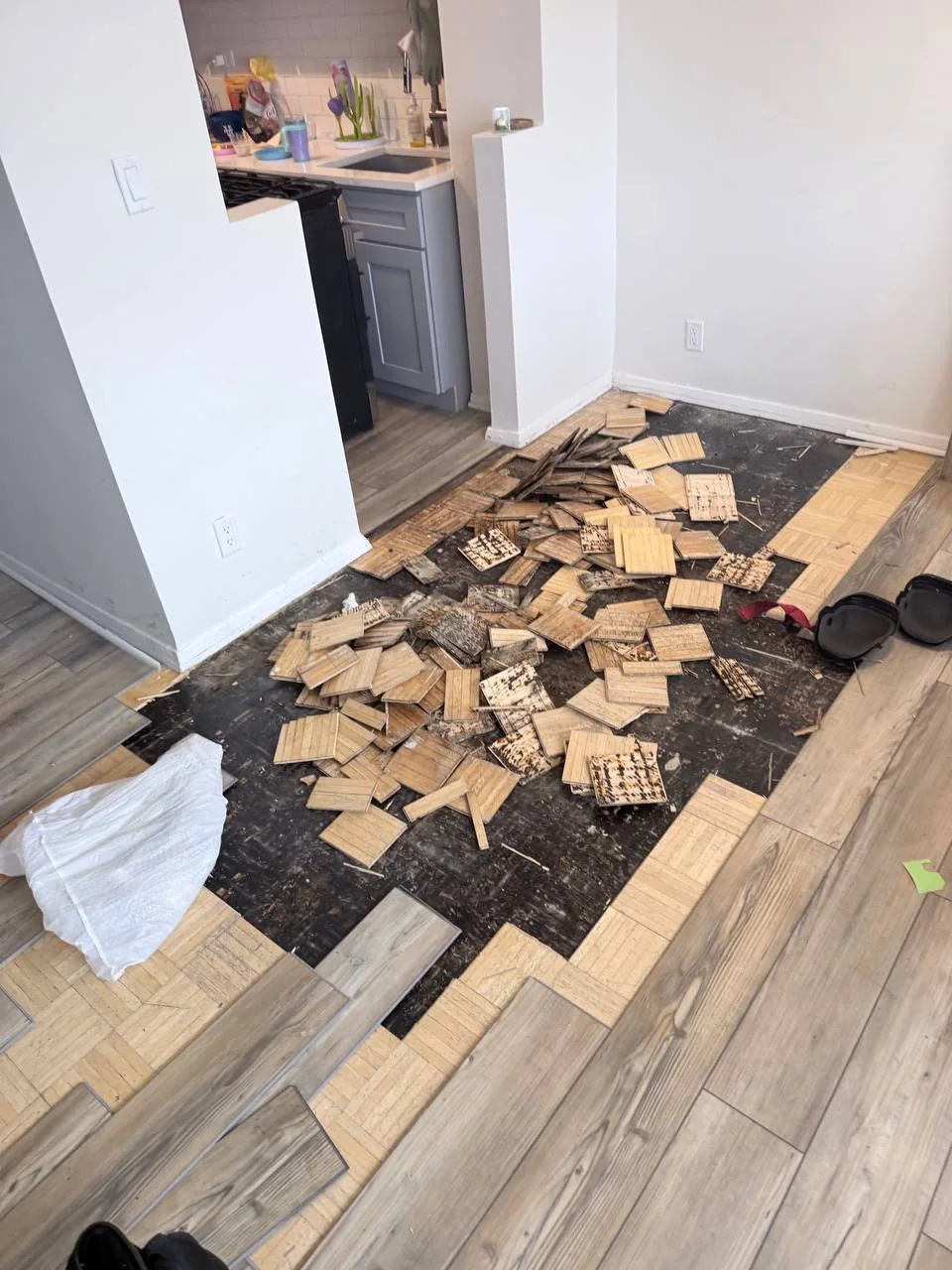
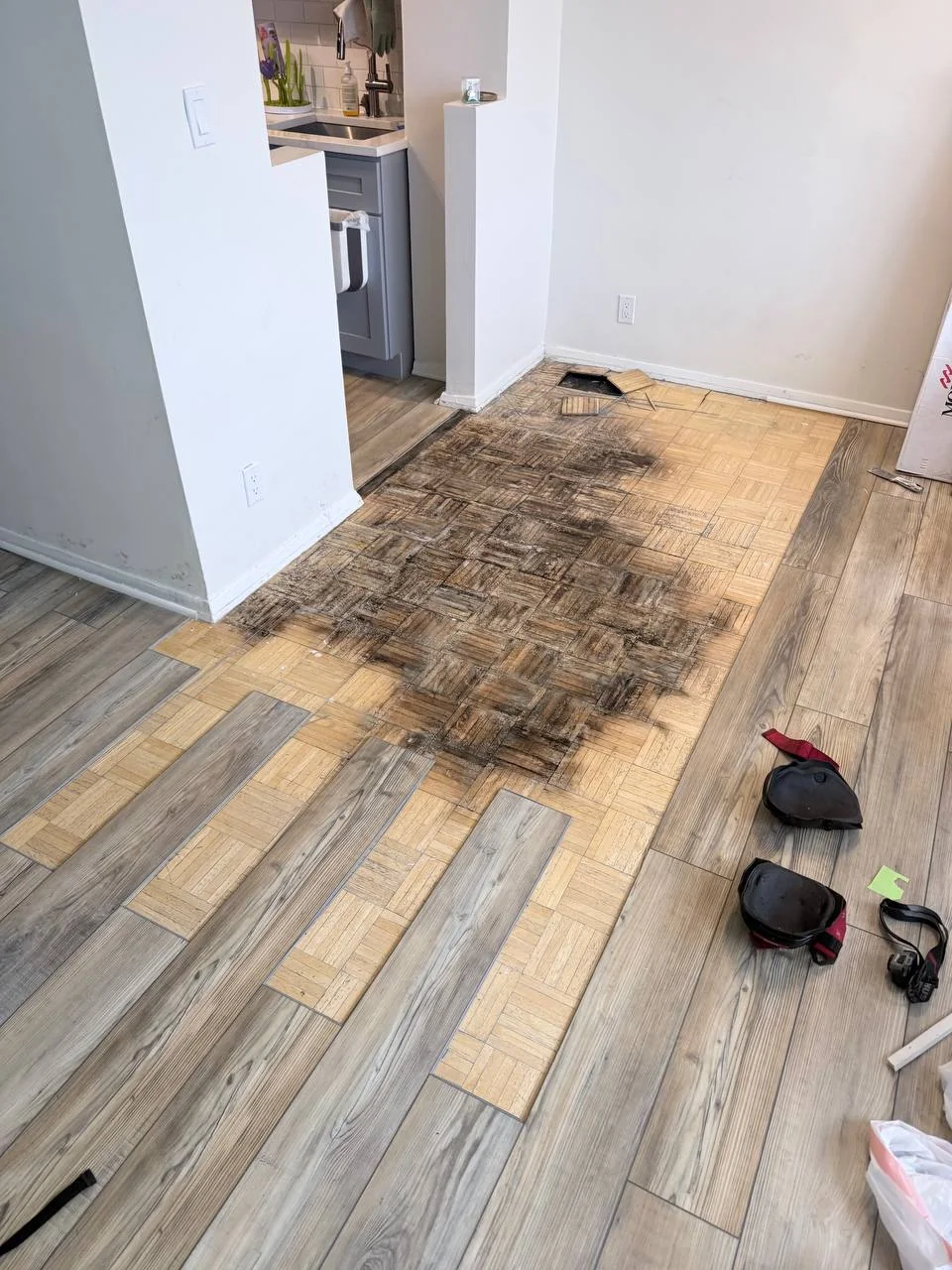
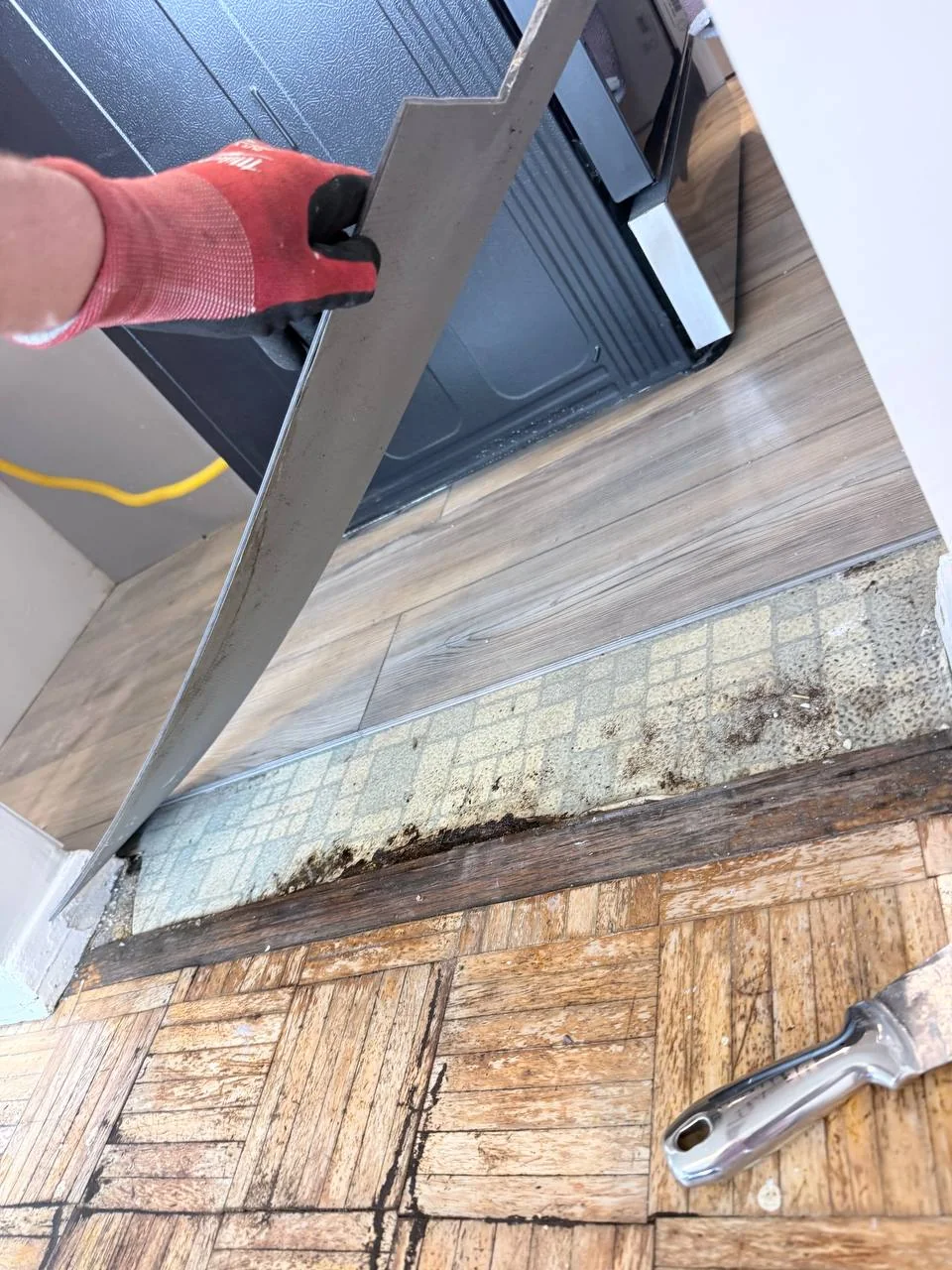
Under the vinyl was an old wood parquet subfloor, and it had absorbed everything. When the first planks came up, the parquet underneath was stained, soft, and growing mold — the damage reached well beyond the dark patch visible on the surface.

Scope of work

  • Open the vinyl plank floor where the water had spread from the kitchen into the living room
  • Remove every rotted, moldy parquet tile from the subfloor — about two hours of demolition and haul-out
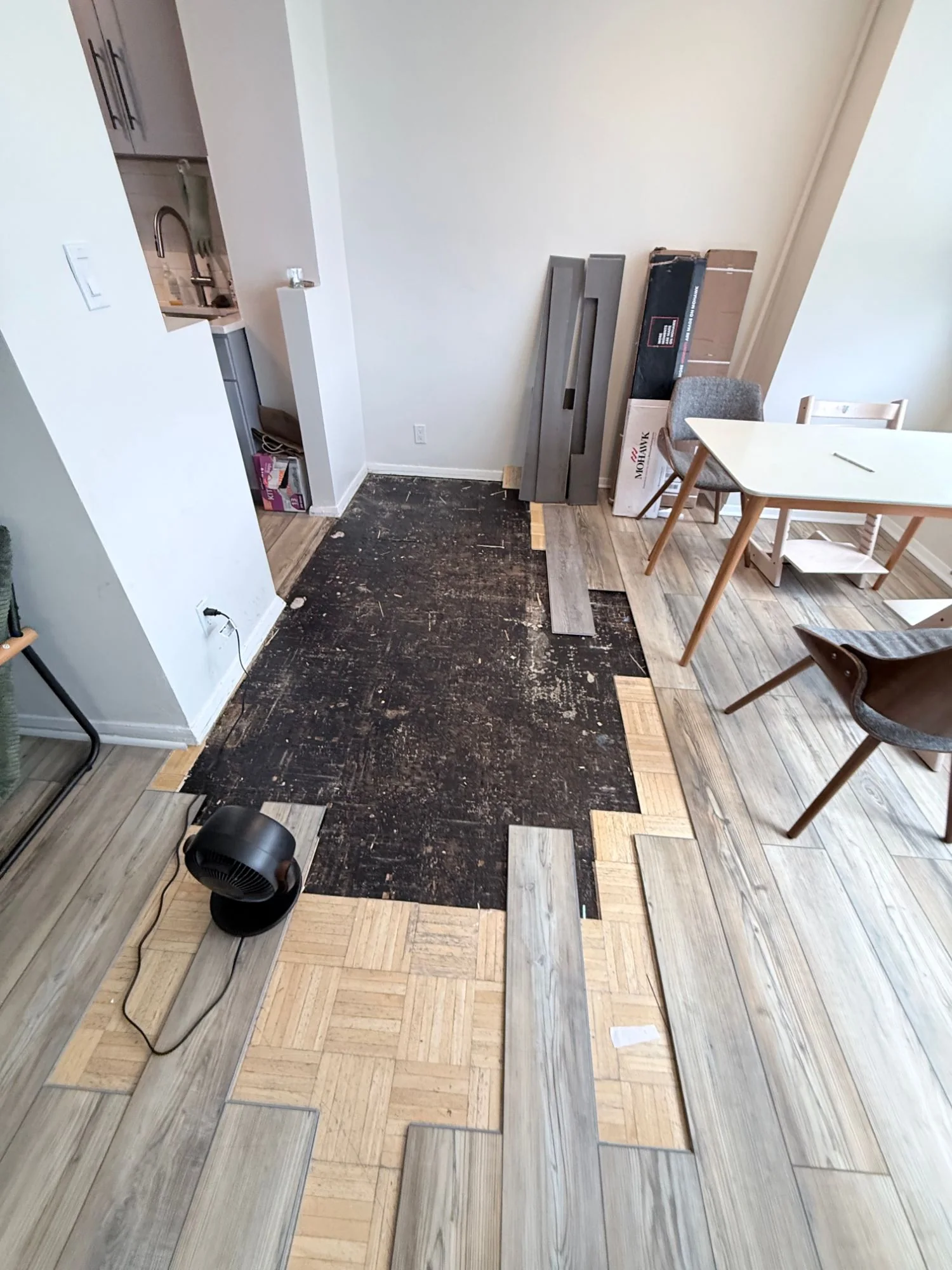
  • Leave the subfloor open with a fan running until it was fully dry, then come back
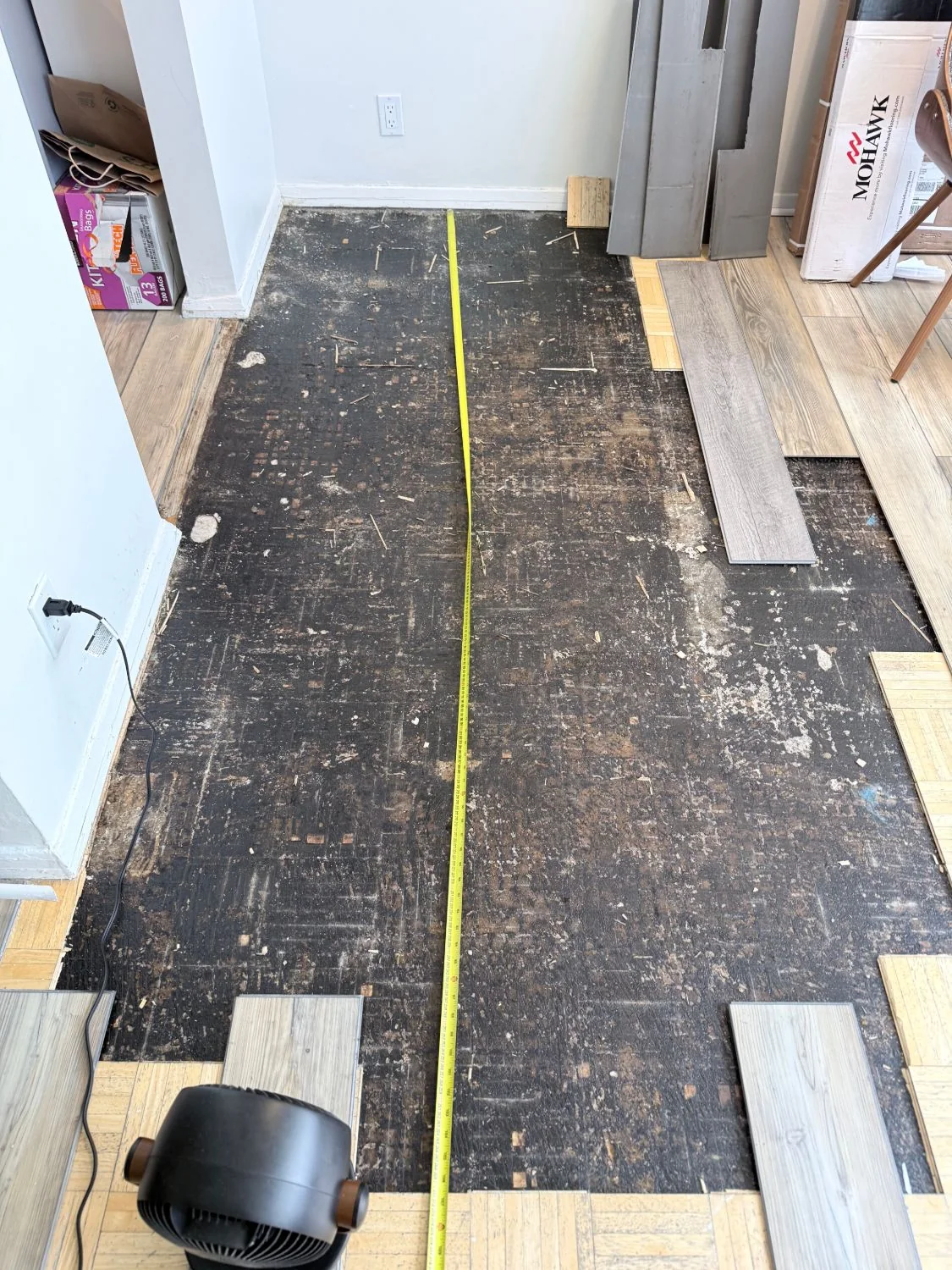
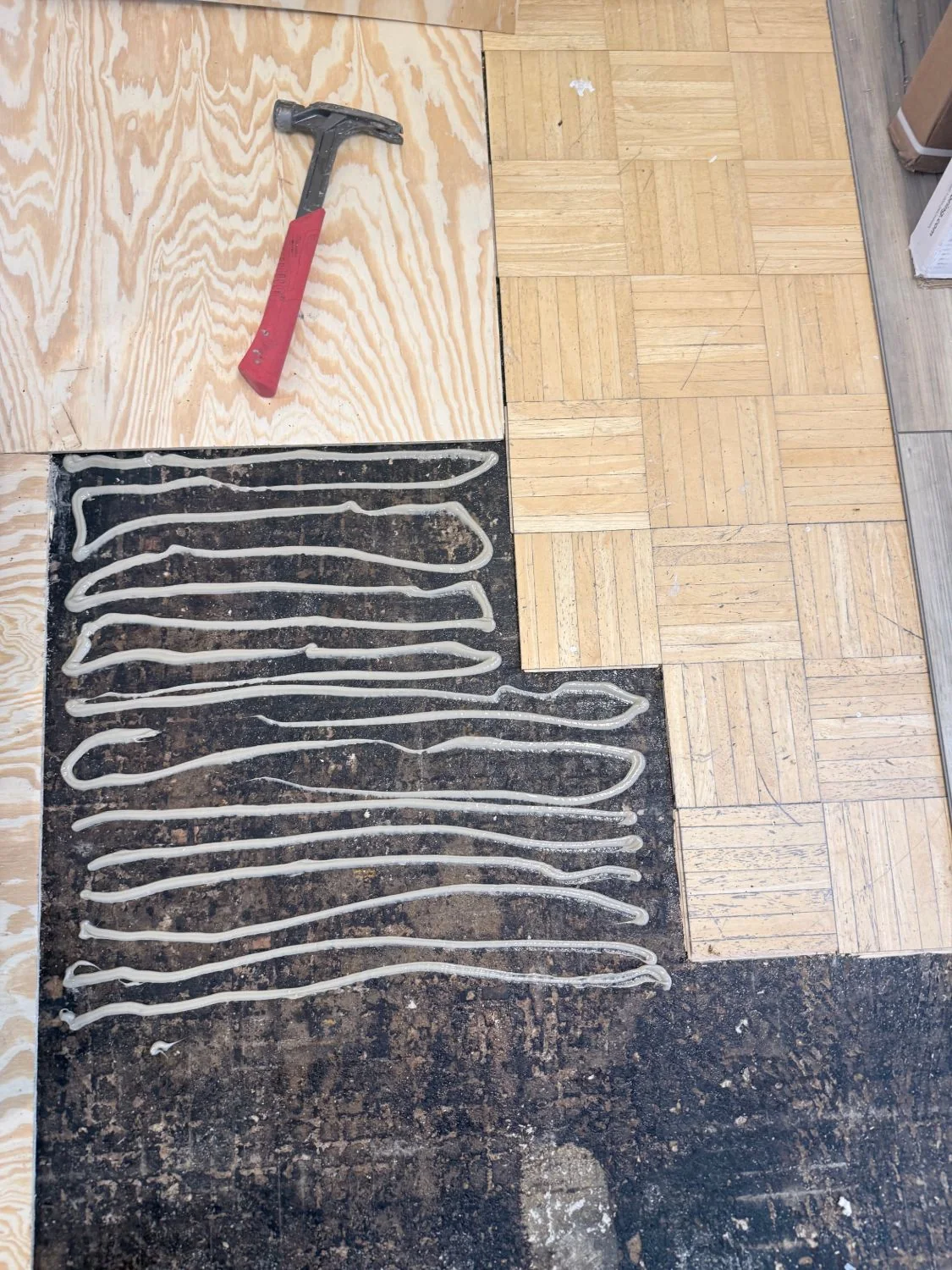
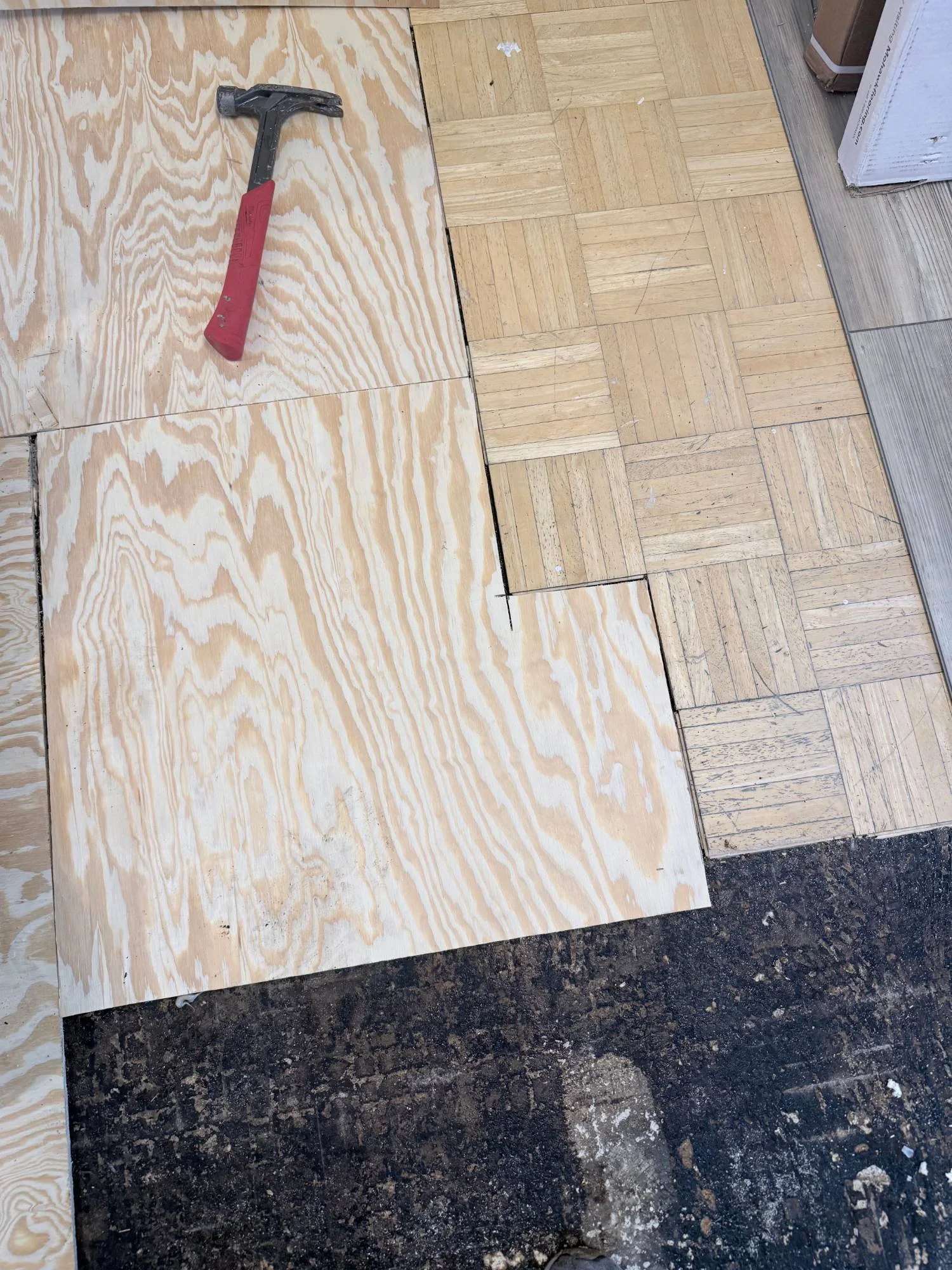
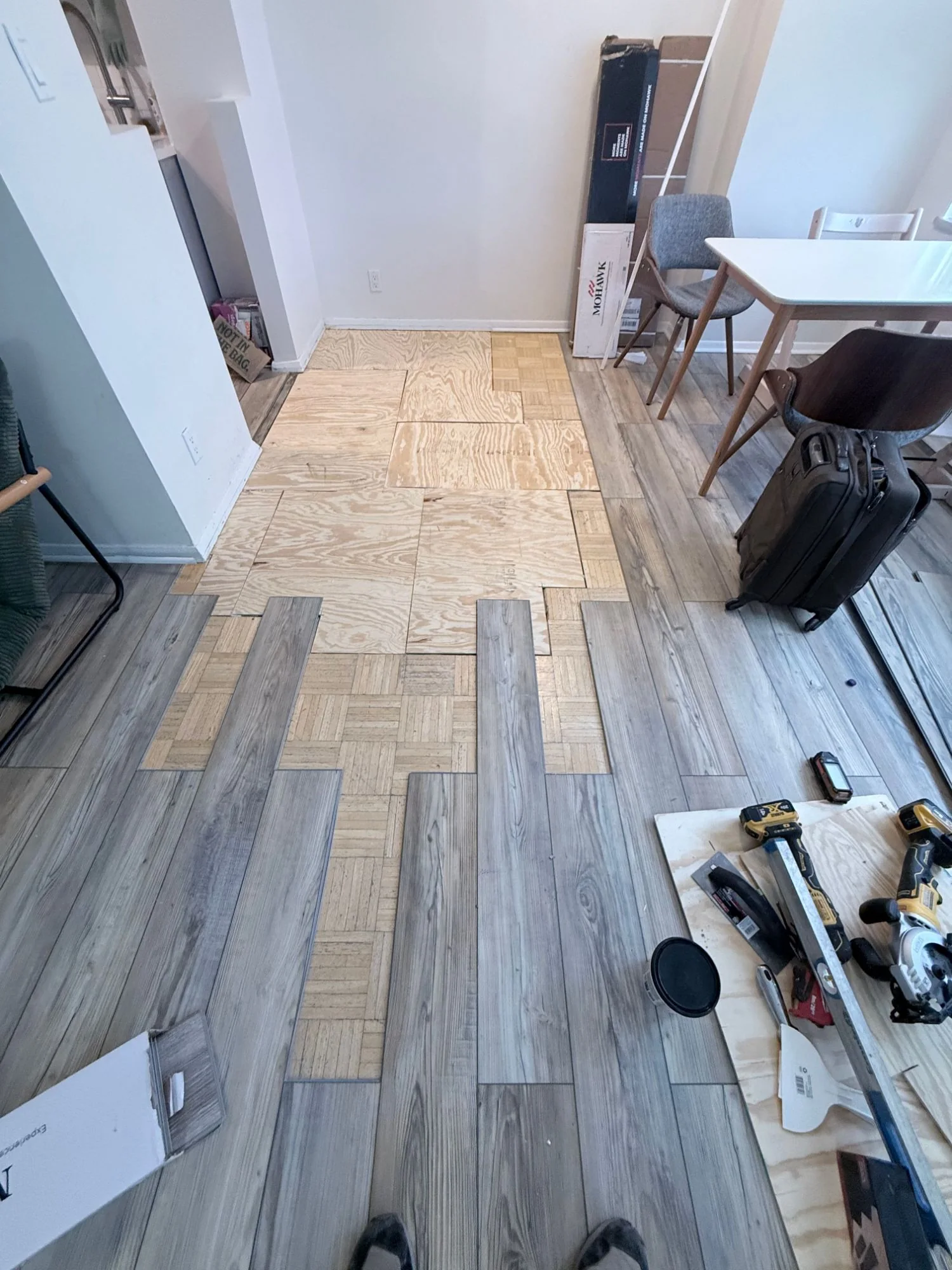
  • Cut and glue down plywood at exactly the thickness of the old parquet, so the new floor sits at the original height
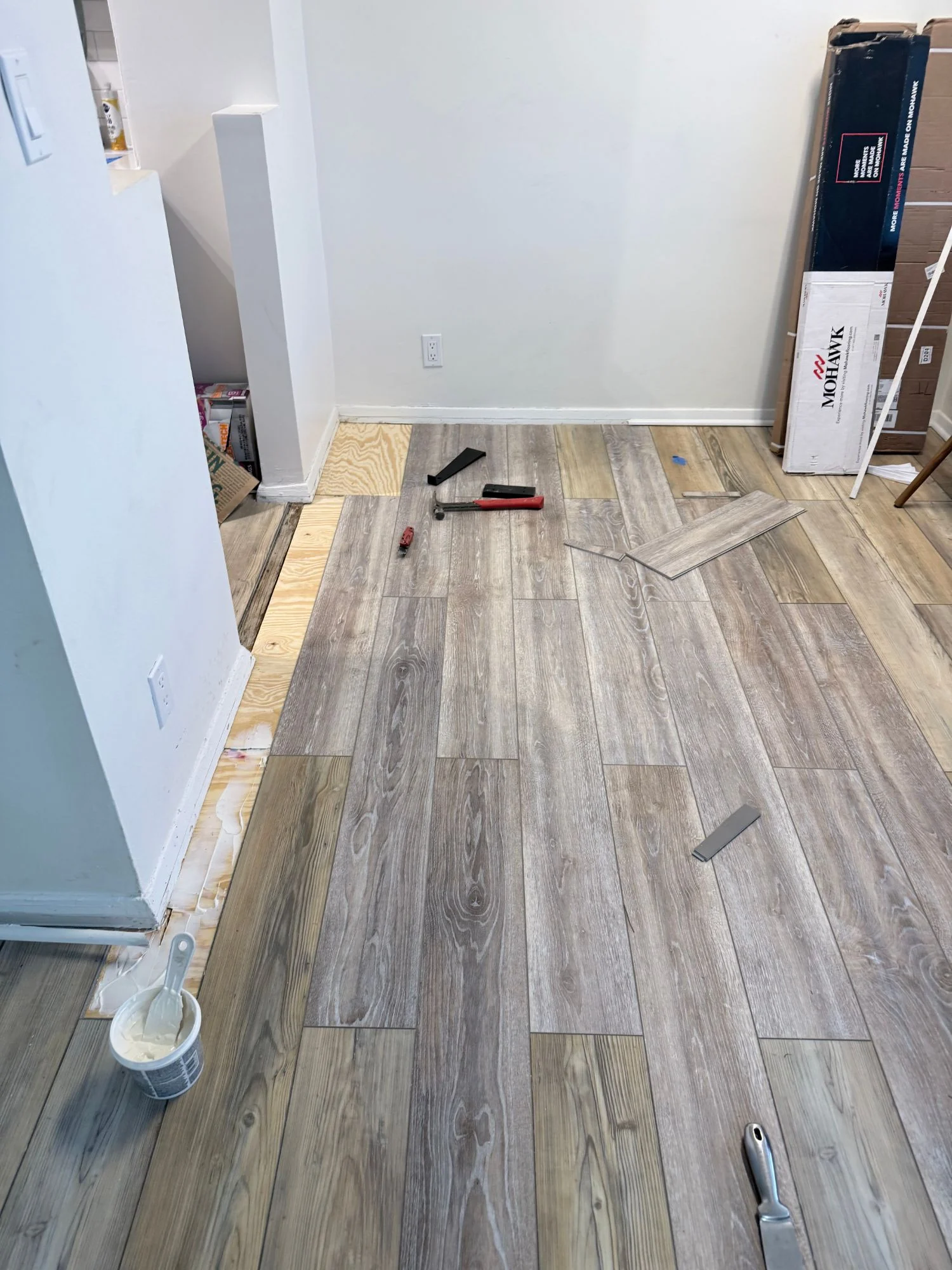
  • Lay a new vinyl plank floor over the repaired area and reinstall the baseboard
  • Offer to clean the original planks; the homeowner chose new planks instead, in a slightly different color
Before and after

From a bare plywood subfloor to a finished floor

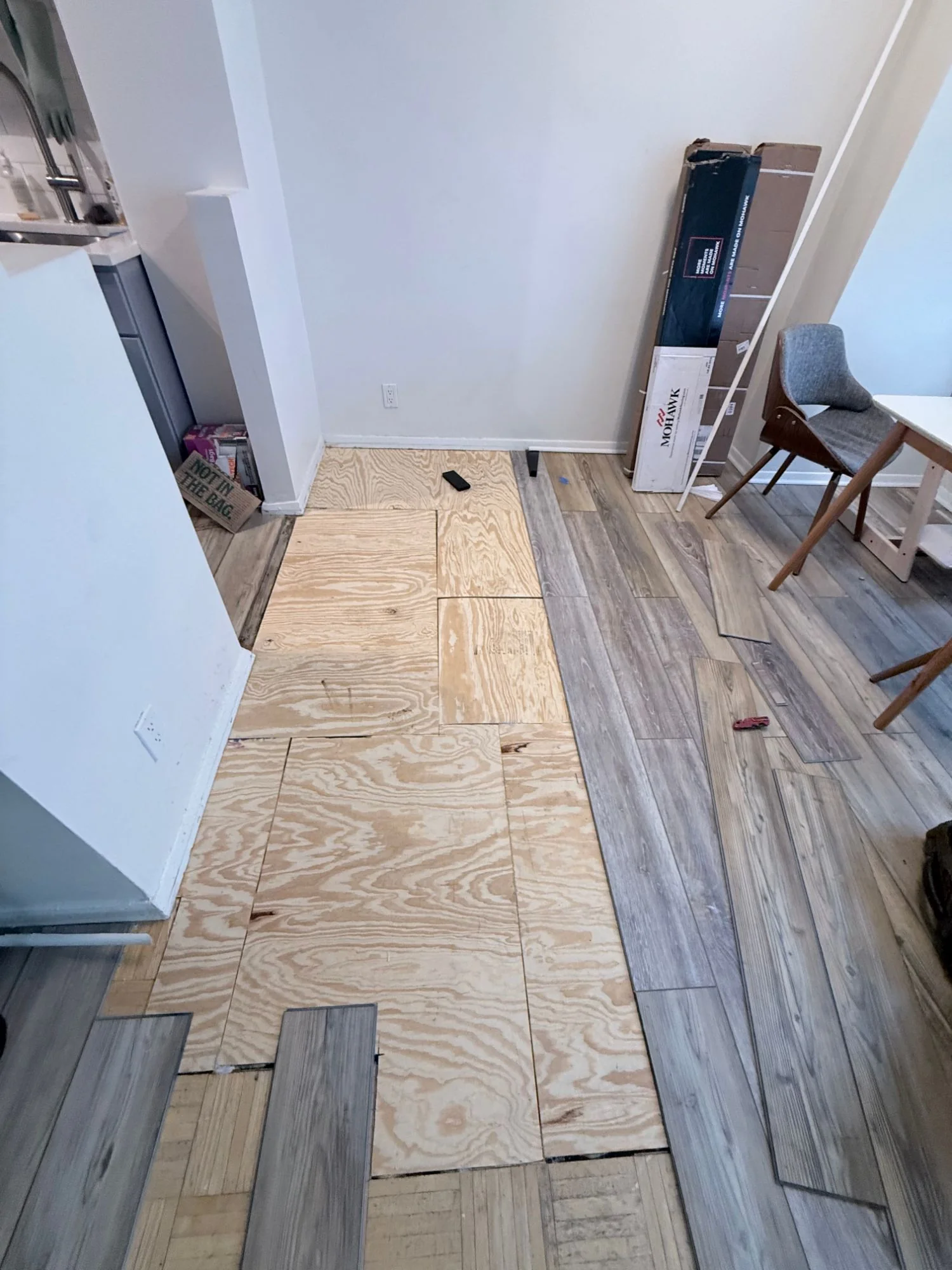
Drag the handle — the same spot in the room, from the new plywood subfloor to the new vinyl plank floor laid over it.

The rebuilt subfloor, then the new floor
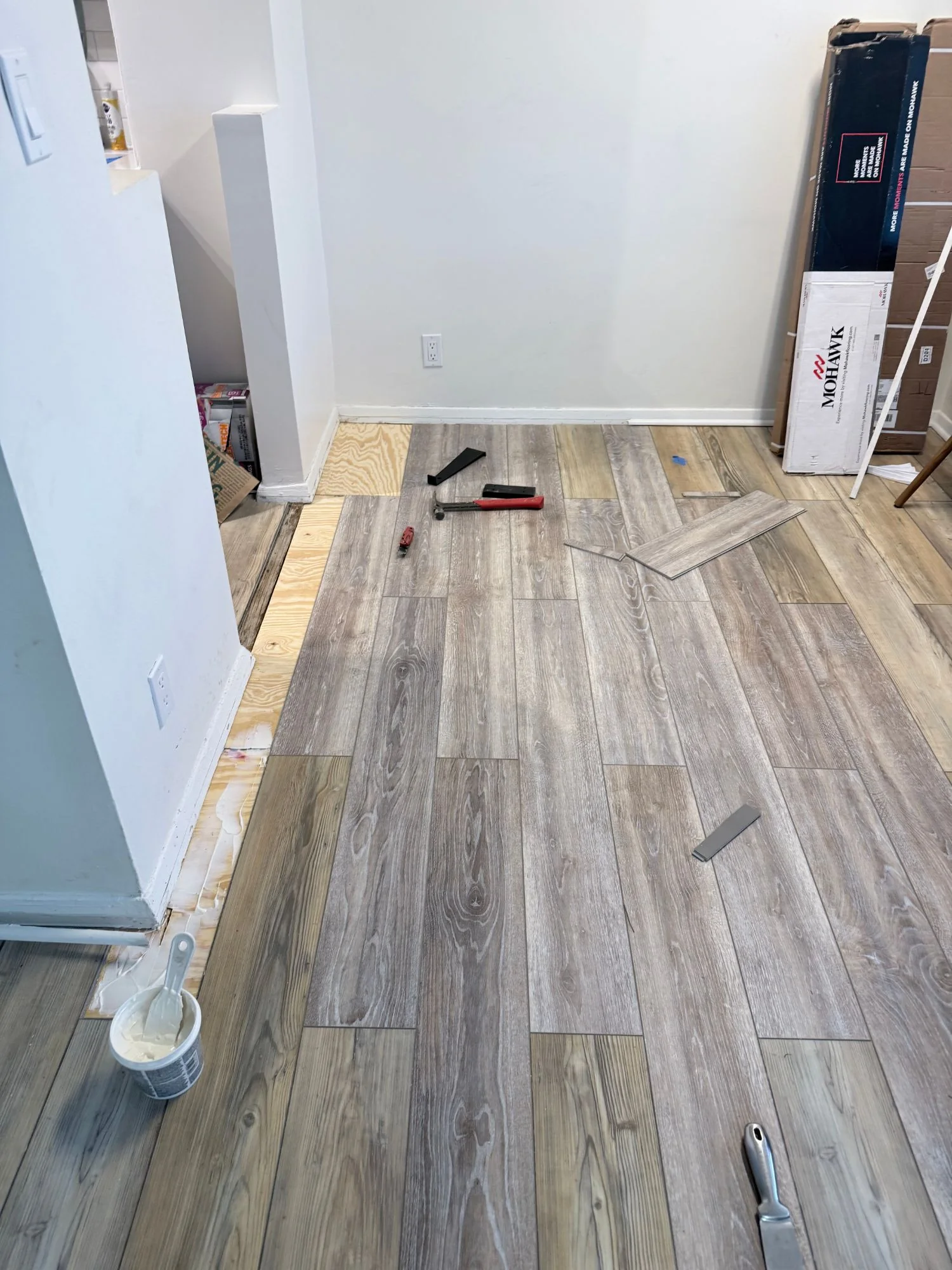
The same area with the new vinyl plank floor laid over the plywood, Bronx apartment
New plywood subfloor glued down where the rotted parquet was removed, Bronx apartment

Drag the slider: the same spot. Plywood cut to the old parquet's thickness and glued down, then the new vinyl planks over it — flush with the rest of the room. The 'after' was taken shortly before the last planks and the baseboard went in.
The work

Open it up, take out the rot, dry it, rebuild it

The vinyl planks came up first, and the parquet underneath told the real story: black with mold far past the visible stain. Every damaged tile was pulled and bagged — about two hours of demolition — until only sound subfloor was left.

Then the floor was left open with a fan running. Rebuilding over a damp subfloor just traps the moisture, so the job paused until it was fully dry. That is why the work happened across separate visits rather than in one day.

On the return visit the area was measured, plywood was cut to the exact thickness of the old parquet and glued down, so the repair sits at the original height with no step. The new vinyl plank floor went down over it, and the baseboard was reinstalled. Total working time was about eight hours.

Why it was done this way

Take out the damage, match the height, let the client choose

Water damage under a floor does not fix itself, and covering it hides the problem for a few months at most. Everything that had rotted or grown mold came out, and nothing was rebuilt until the subfloor was dry. The plywood was matched to the old parquet's thickness on purpose — a floor repair you can feel underfoot is not a repair.

The original vinyl planks could have been cleaned and reused, and that option was offered. The homeowner preferred new planks. Since the exact pattern was no longer available, the new section is a slightly different color — a trade-off they chose knowingly, and the honest way to handle it.

Related services

Water damage under your floor?

This project connects to floor repair, vinyl plank installation, and general home repairs for apartments across the Bronx and New York City.

FAQ

Water-damaged floor repair FAQ

What happens when water sits on a vinyl plank floor?

Vinyl planks resist water on top, but standing water works into the seams and edges and reaches whatever is underneath. On this job that was a wood parquet subfloor, which soaked it up, rotted and grew mold. A musty smell with no visible damage is the usual first sign.

Do you have to replace the whole floor after a leak?

Usually not. Only the damaged section needs to come out. Here the rotted parquet was removed, the subfloor was rebuilt with plywood at the same height, and new planks were laid over just that area.

Can the old vinyl planks be put back?

Sometimes. The planks here had mold on their undersides, and Repair Asap offered to clean and reuse them. The homeowner chose new planks instead; because the exact pattern was no longer available, the new section is a slightly different color, which they accepted.

How long does a repair like this take?

On this job, about two hours to open the floor and remove the damaged parquet, then a pause of several days for the subfloor to dry, then about six hours to buy materials, glue down the plywood and lay the new planks — roughly eight hours of work across separate visits.

A leak, a soft spot, or a musty smell from the floor?

Send a few photos of the area and Repair ASAP can quote opening the floor, replacing the damaged subfloor, and laying new planks.