The door and wall, before and after
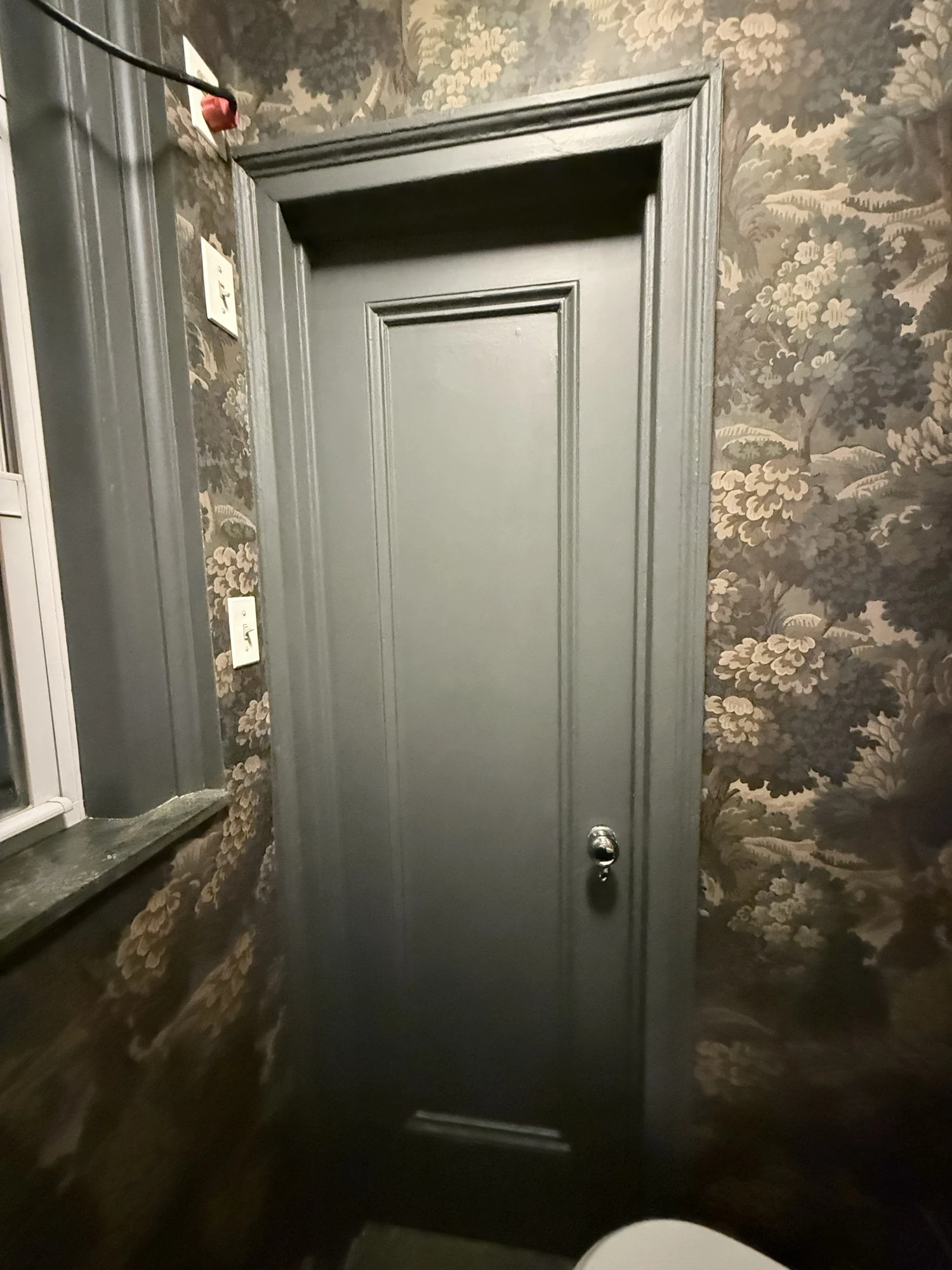
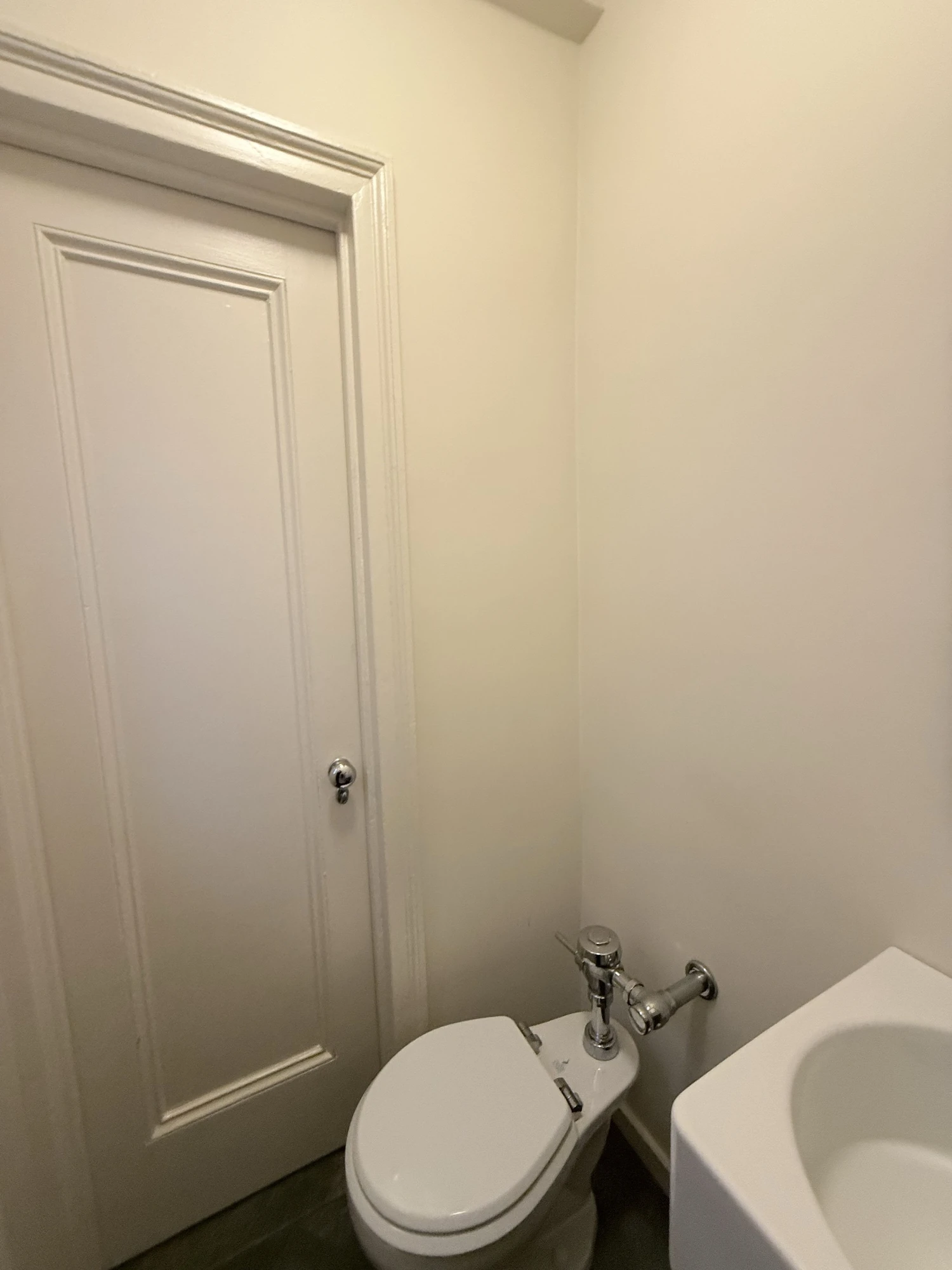
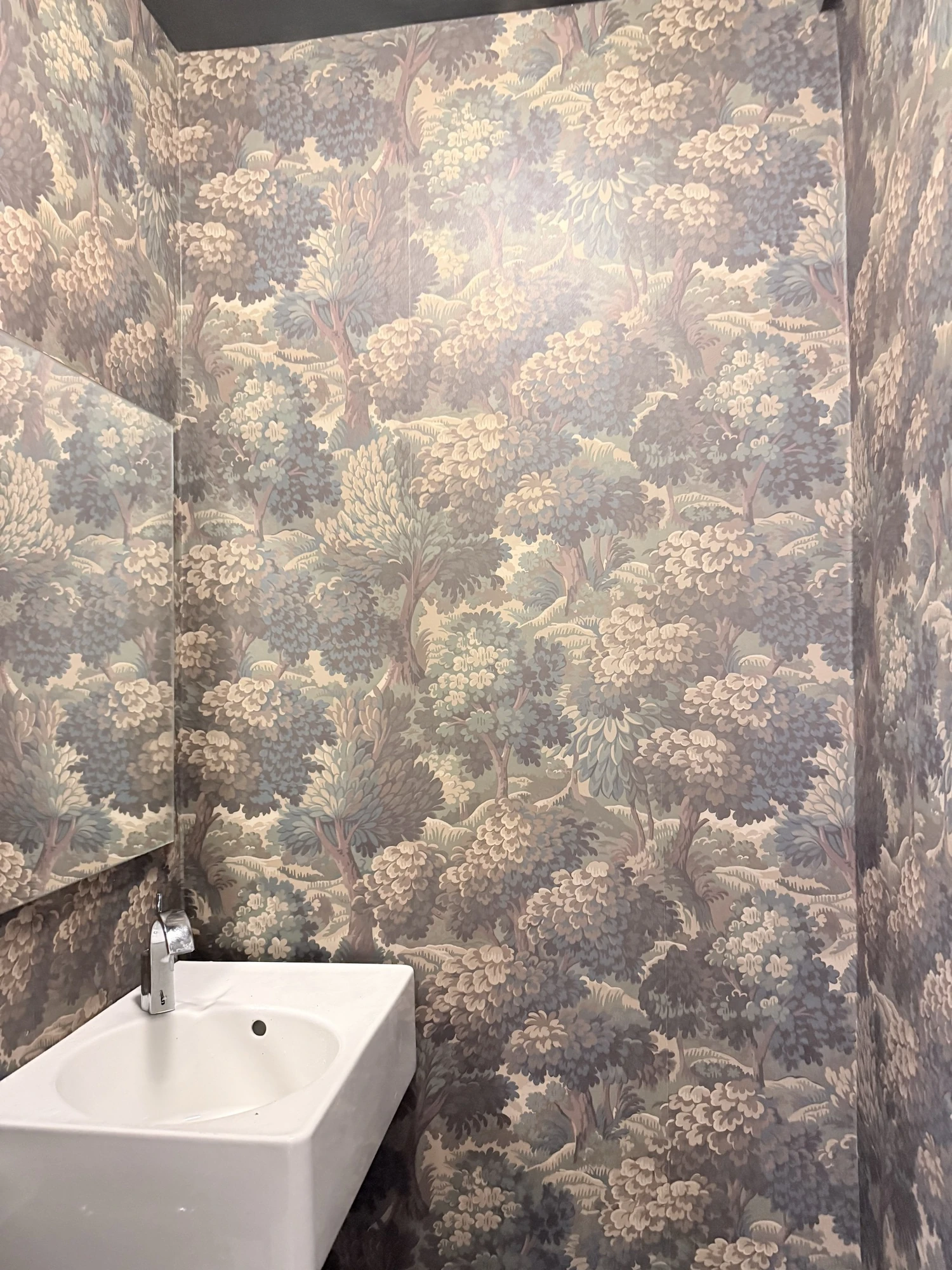
Drag the slider: the same door and corner. The door and trim went from white to a deep dark color, and the wall from bare white to a large botanical wallpaper.

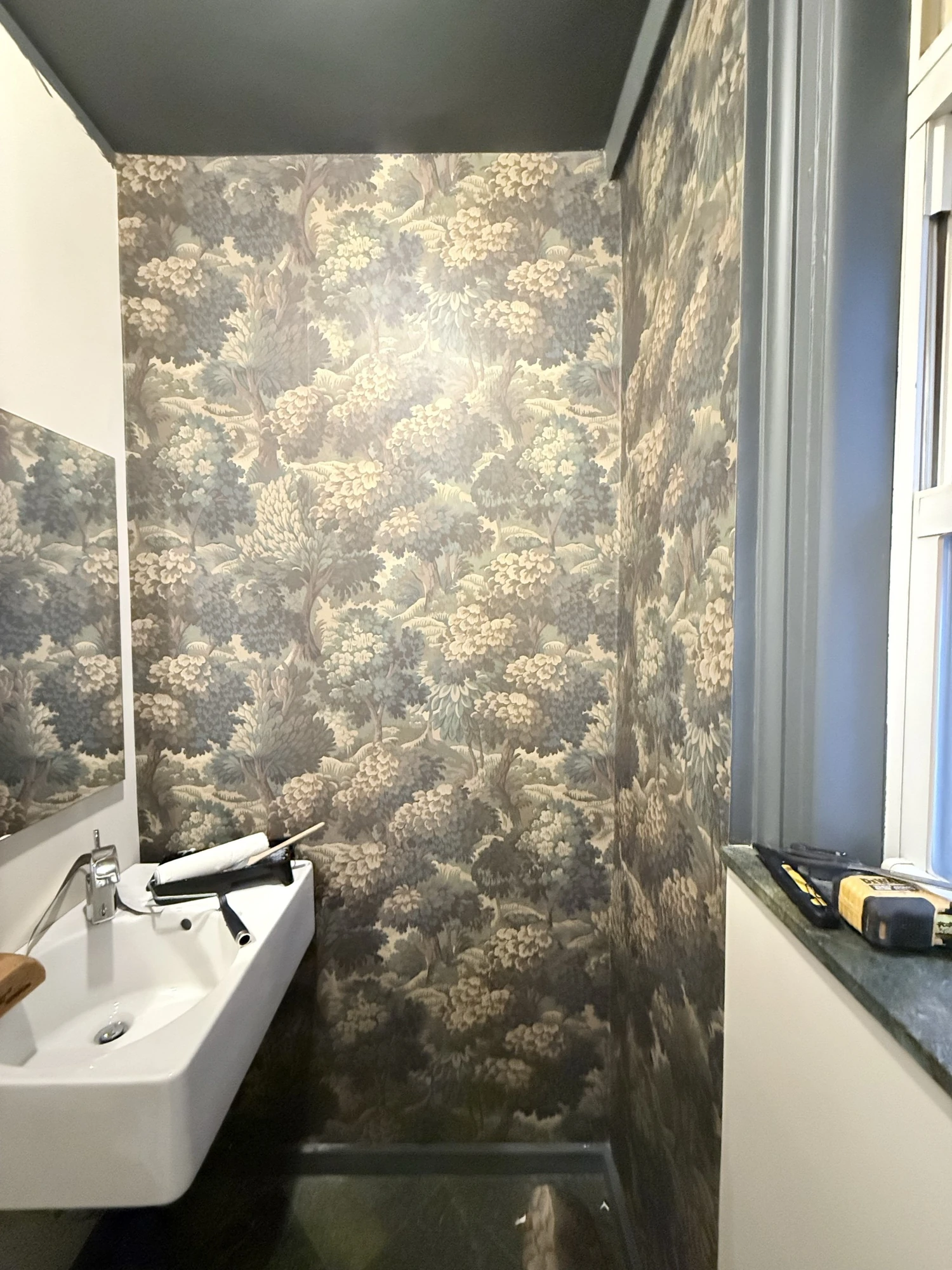
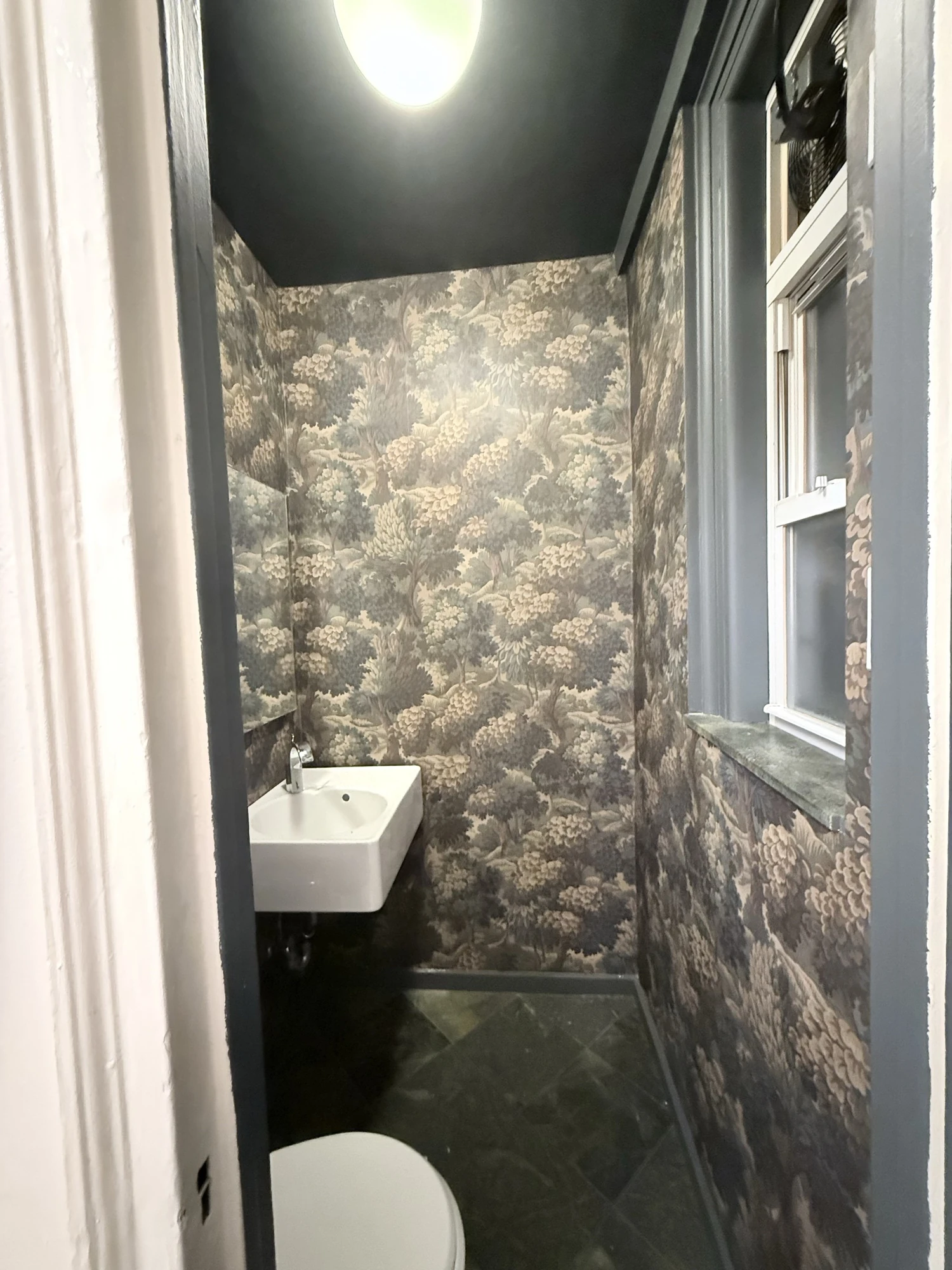
A plain white powder room on the Upper West Side turned into a dark, enveloping jewel box. The ceiling, door and trim were primed and painted a deep dark color, then a large-scale botanical wallpaper was hung on the walls — a small room made unforgettable.
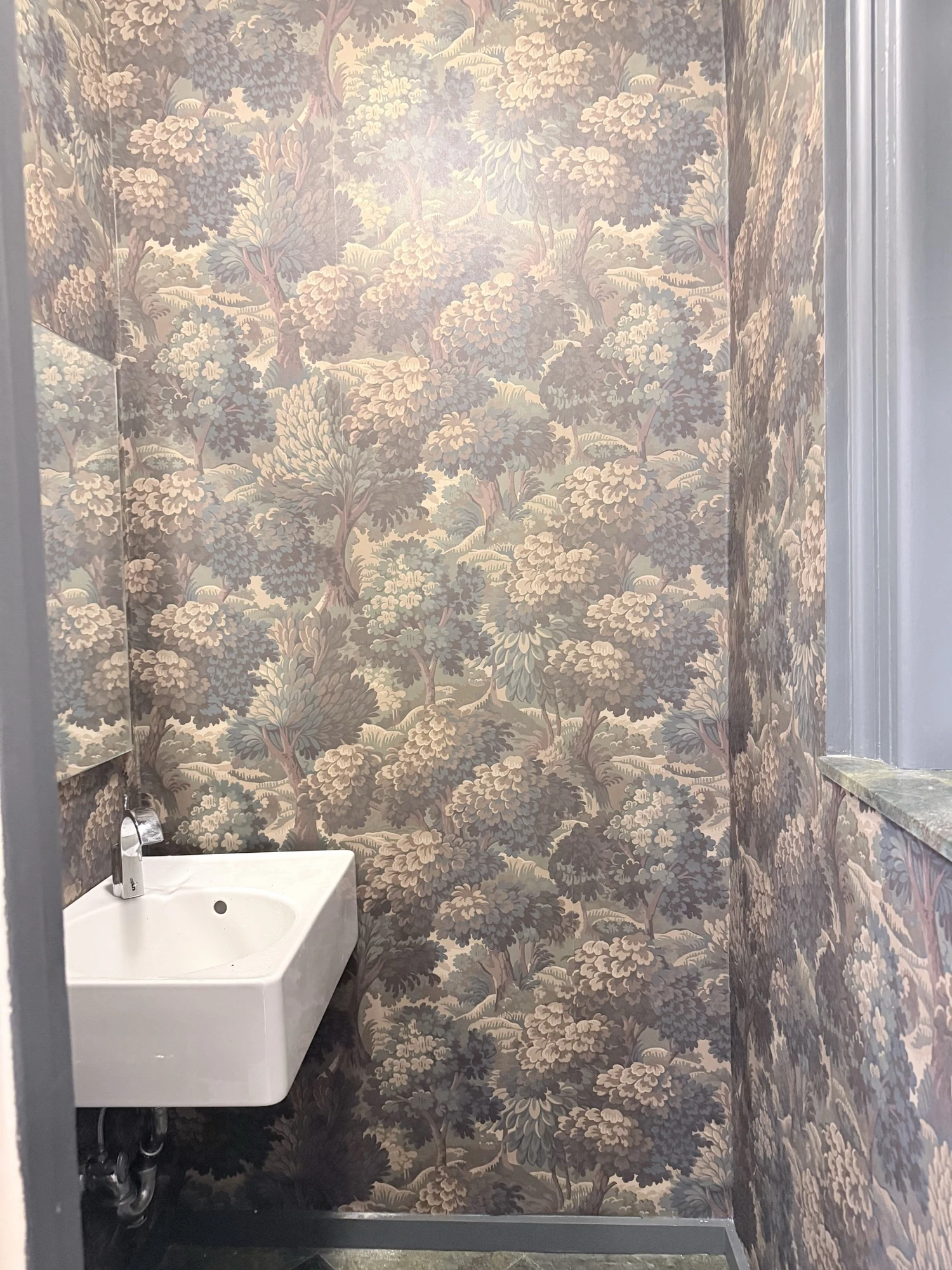
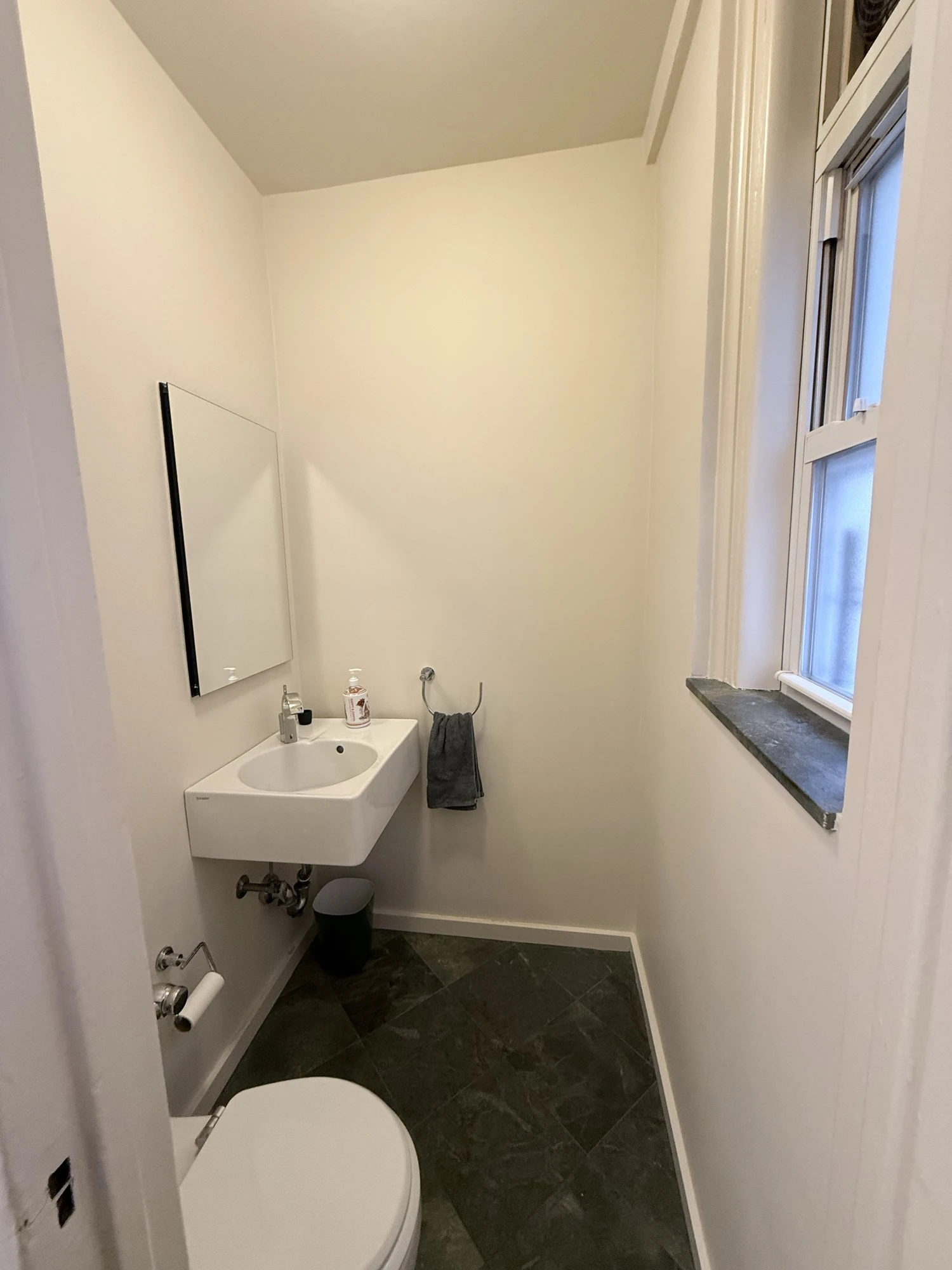
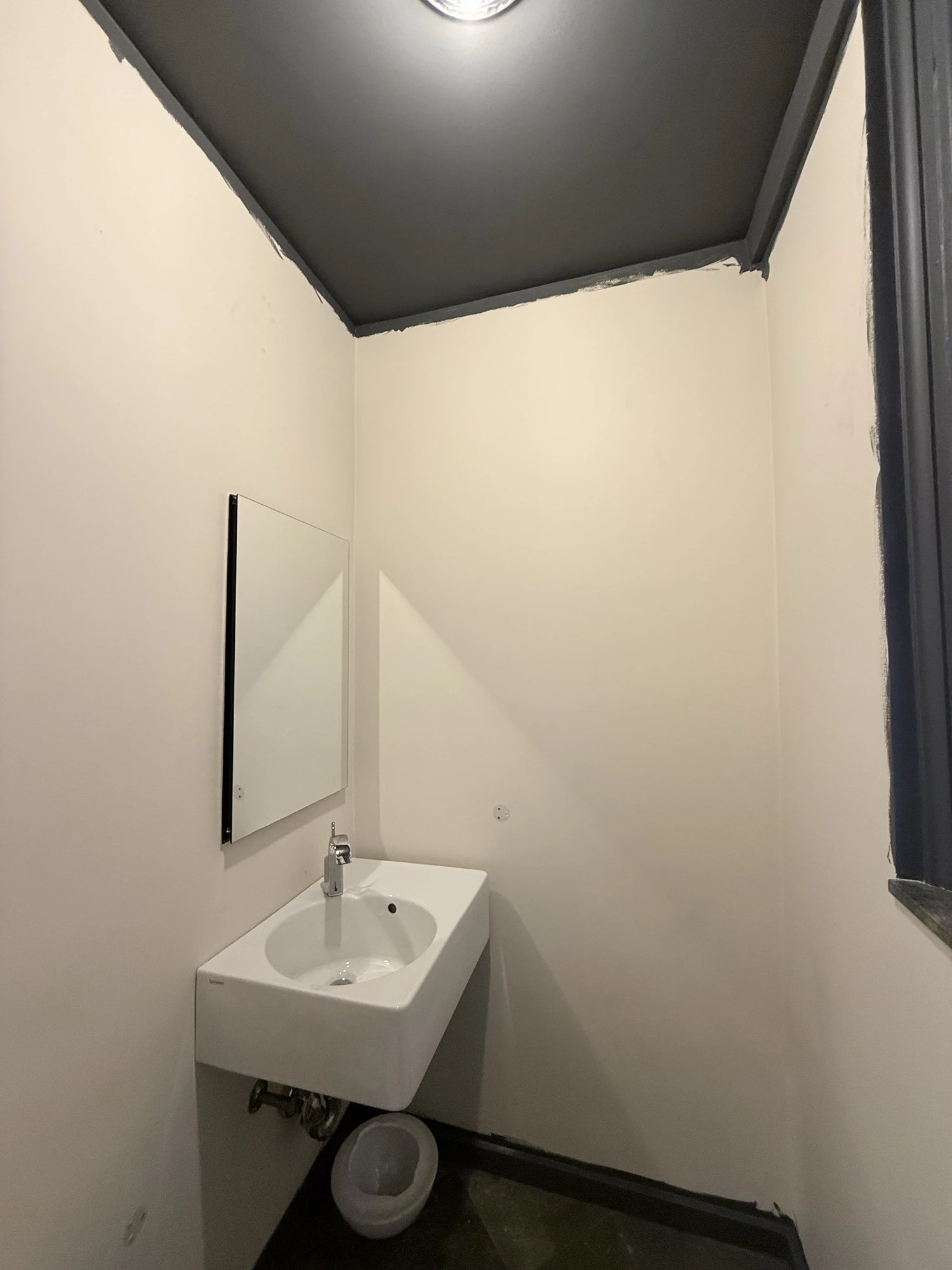
The room began as a small, all-white powder room — clean but forgettable, the kind of space that blends into the background.
The homeowner wanted to make it a feature: a dark, moody little room with a deep-painted ceiling and a bold botanical wallpaper. The plan was to paint first, let it dry, then hang the paper.
Drag the handle to compare — the same door and wall, from plain white to a dark-painted door beside the new botanical wallpaper.
Drag the slider: the same door and corner. The door and trim went from white to a deep dark color, and the wall from bare white to a large botanical wallpaper.
White walls, white trim, a white ceiling — a clean slate for something much bolder.
The first visit was all paint. The ceiling, door and trim were primed and then given two coats of the deep dark color the homeowner chose. A dark finish shows every flaw, so the primer plus two coats is what makes it read as rich and even rather than blotchy.
The paint was left to fully dry before anything else happened — the schedule was built around cure time, not rushed.
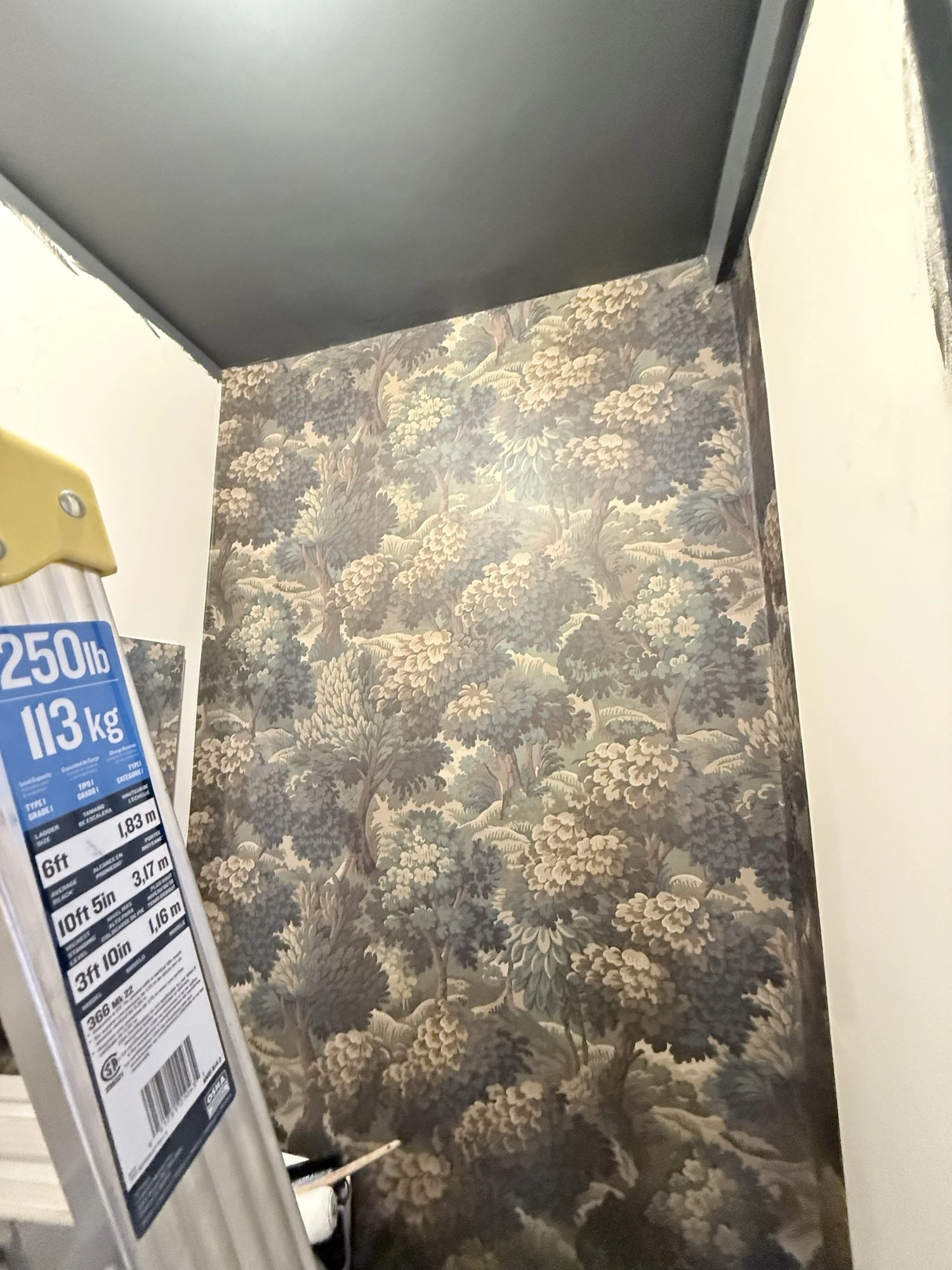
On the second visit, the botanical wallpaper went up: a large-scale pattern hung across the walls, matched seam to seam and cut in tight around the window, the door casing, the sink and the ceiling light. The finished paint was kept protected while the paper went on.
Two visits — priming and painting the ceiling and trim dark, then hanging the botanical wallpaper.
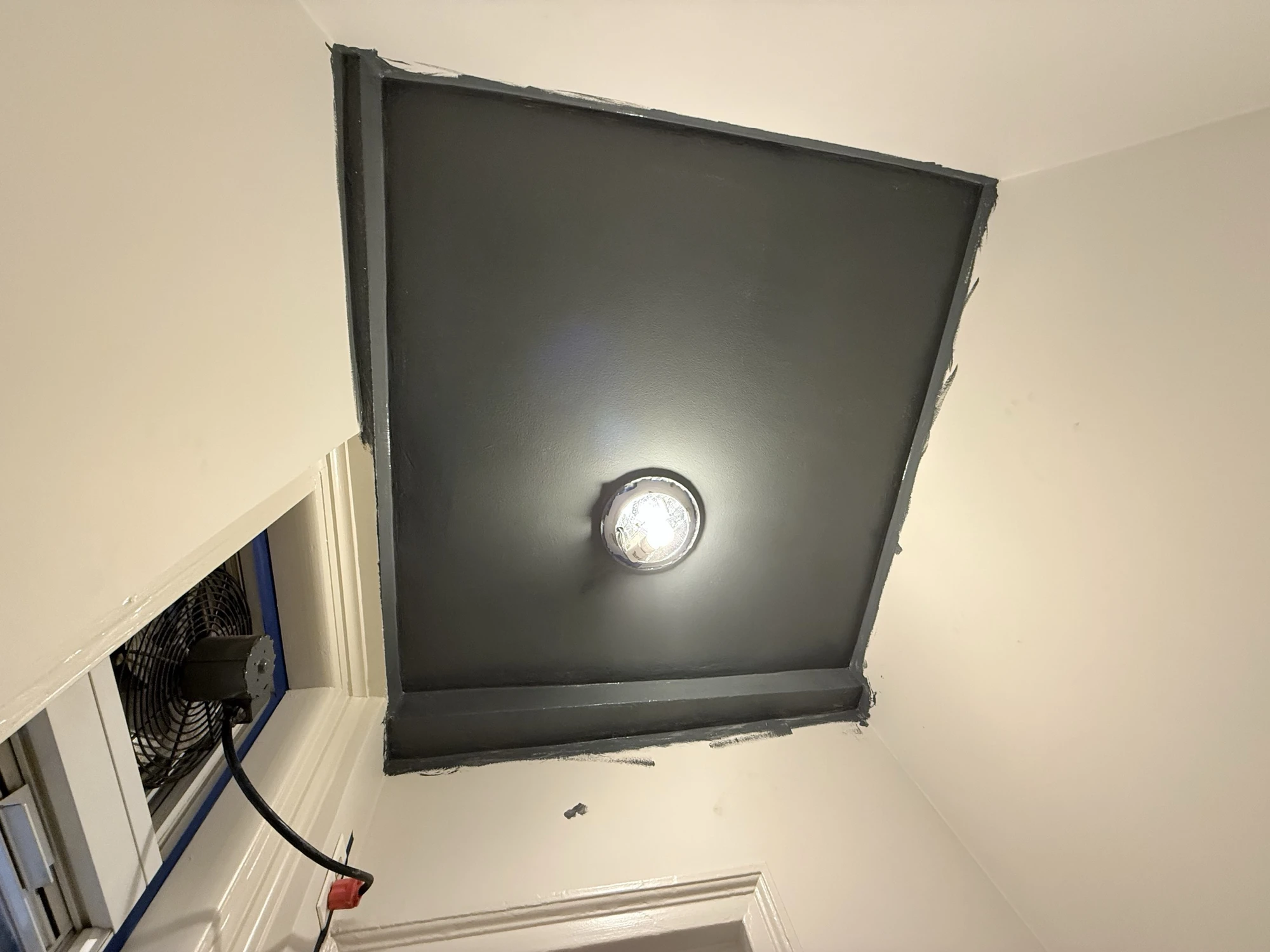
Two things make a tiny dark room feel intentional instead of cramped. First, the paint has to be done properly — primer and two coats — so the deep color on the ceiling and trim reads as a solid, even envelope rather than a patchy job. Dark colors are the least forgiving, so the prep is the whole game.
Second, the wallpaper. A large botanical pattern gives a small room depth and a focal point, and hanging it so the pattern lines up and cuts cleanly around the window, door and fixtures is what separates a sharp job from a sloppy one. Together, the dark envelope and the bold paper turn the smallest room in the home into the most memorable one.
A deep-painted ceiling and trim wrapping a bold botanical wallpaper — a small powder room with real presence.
This project connects to wallpaper installation, interior painting, and trim and door painting for homes across Manhattan and NYC.
Yes. On this powder room the ceiling, door and trim were painted a dark color first, then the walls were wallpapered on a second visit. Painting first and letting it fully dry keeps the fresh paint from being damaged while the paper goes up.
Dark colors show every roller mark, thin spot and shadow. Priming first and applying two coats is what makes a dark ceiling or trim read as a rich, even finish instead of a patchy one. On a small room where every surface is close to your eye, that prep matters even more.
A small powder room is one of the best places to go bold. A large-scale pattern gives a tiny room depth and a focal point, and because the space is small, a striking wallpaper turns the least-used room into the most memorable one.
This room took two visits: one to prime and paint the ceiling and trim dark, and a second to hang the wallpaper after the paint had dried. Splitting it over two days builds in the drying time that keeps the finish clean.
Send a few photos of your powder room or space and Repair ASAP can quote paint, wallpaper, or both — start to finish.